Find Vādma near me
Book a session with a certified practitioner
Looking for Vādma near you? A Vādma session is about 2 hours, in person, with a practitioner certified by the Vādma Institute. It works with your own nervous system through touch, breath and energy work, and no substance of any kind is ever taken.
Vādma practitioners are in 25 countries. Tell the team where you are, and your request is kept until a practitioner near you is available.
 +1,000 positive client
experiences reported
Every Vādma session is given in person, by a practitioner trained and certified by the Vādma Institute. No medicine and no substance of any kind is ever taken: it is 100% natural.
How do you book a Vādma session near you?
Booking takes about a minute. What takes longer is the match: Vādma is only given by certified practitioners, and there are not yet enough of them everywhere. So the honest version is three steps and some patience.
Tell the team where you are
Send the short request form with your city and country, and what you are looking for: a private session, a group session, or both.
Your request stays on file
The Vādma Institute keeps it until a certified practitioner is available in your area. This is not an instant match, and outside the bigger cities it can take a while.
You hear back when someone is near
When a practitioner is available near you, you get in touch directly. They tell you their rate and dates before anything is booked.
Where can you find a Vādma practitioner?
Vādma practitioners, certified or finishing their certification this year, are in these countries and regions.
Names are not listed yet: a practitioner directory is on its way, expected by the end of 2026.
The Americas

United States
San Diego, San Francisco, Los Angeles area, New York, Boston, Miami, Palm Beach, Austin, Las Vegas, Michigan, Ohio, New Jersey, Minnesota, Hawaii

Mexico
Mexico City, Querétaro, Tlaxcala

Canada
Toronto, British Columbia

Costa Rica
Nicoya Peninsula

Brazil
São Paulo, Salvador
Europe

United Kingdom
London, Derby

Germany
Munich, Cologne, Frankfurt, Hamburg area, Bavaria, Saxony

Switzerland
Zurich, Geneva area, Neuchâtel

Austria
Salzburg region, Styria

Netherlands
Amsterdam, Rotterdam area

Spain
Mallorca, Madrid area

Portugal
Lisbon, Porto area

Italy
Lombardy, Umbria

France
Toulouse

Ireland
Dublin

Norway
Oslo, Telemark

Czech Republic
Prague

Estonia
Tallinn area

Romania
Brașov region

Ukraine
Kyiv
Asia and Australia

Australia
Sydney, Central Coast, New South Wales

Indonesia
Bali

Singapore
Singapore

India
Hyderabad

China
Shanghai
More practitioners certify with every training, and around 150 certified practitioners are projected by early 2027. Not in the list? Send a request anyway: every request shows where the next practitioners are needed.
What is Vādma?
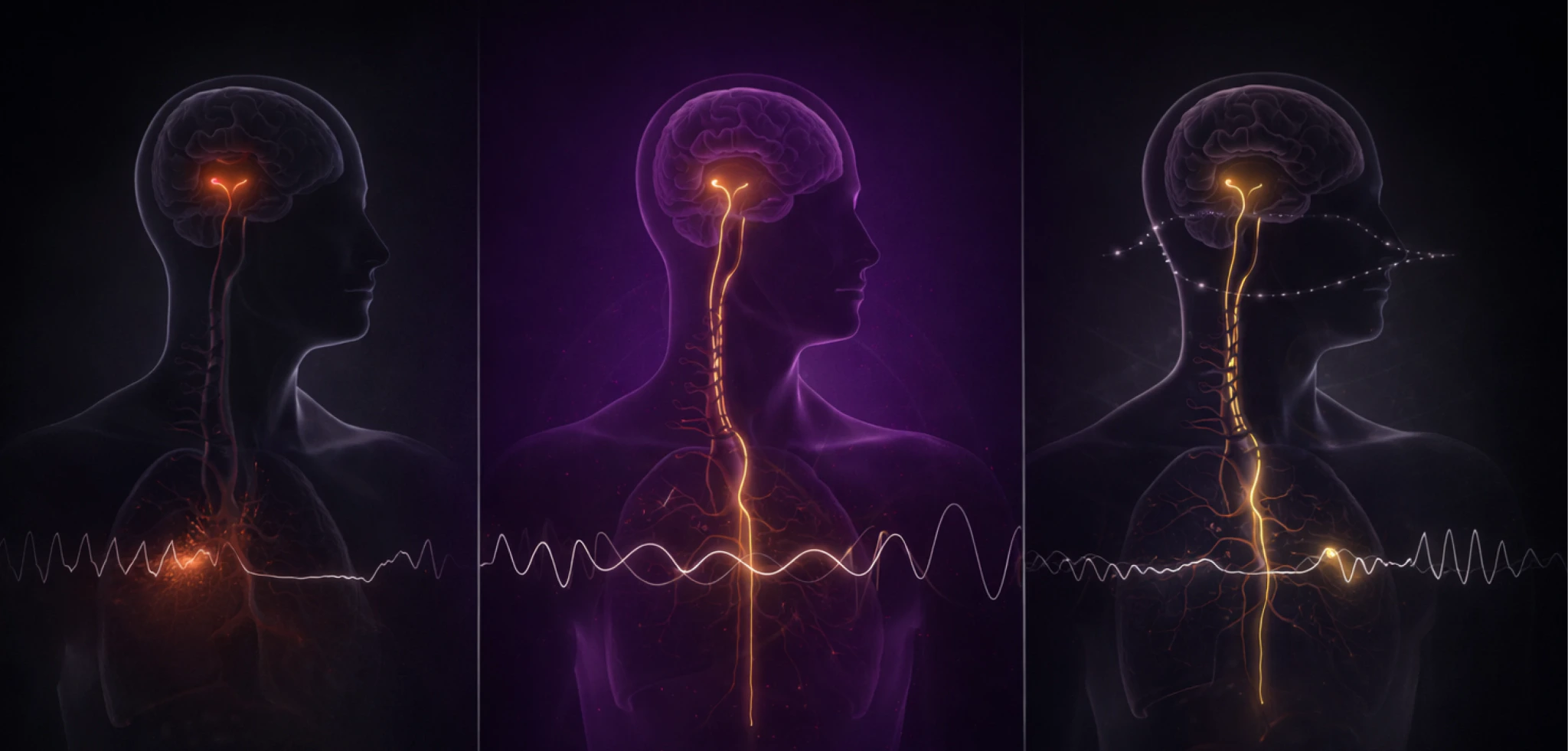
Vādma is a neuro-somatic modality taught and certified by the Vādma Institute.
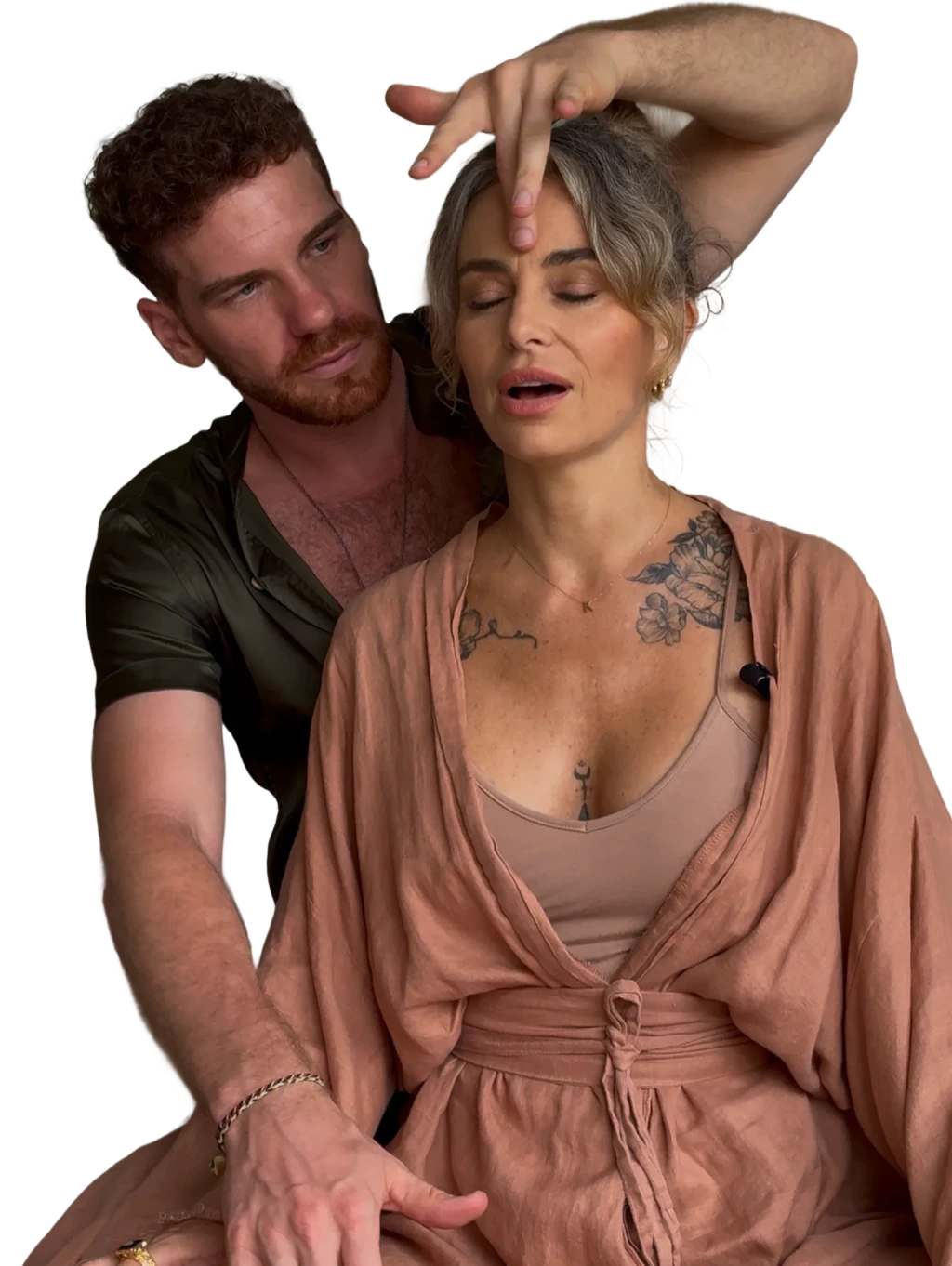
A session combines touch and bodywork, breath, energy work, light and scent with an integration phase at the end, and it takes about 2 hours, in person.
It works with your own nervous system and body: no medicine and no substance of any kind is ever taken.
More than 1,000 receivers have shared positive experiences, and many describe their session as one of the most profound experiences of their life.
In early pilot measurements (heart rate variability recorded with ECG before and after one session), every receiver who reached the deep phase showed the Baevsky stress index falling by 36 to 49%, total autonomic power rising 1.6 to 2.3 times and resting heart rate dropping by 3 to 19%.
These are early, observational findings in a small group, and a peer-reviewed study is in preparation, expected in 2027. Vādma is not a medical treatment and does not replace medical care.
- ~2 hOne session, given in person
- 0Substances. 100% natural and drug-free
- 1,000+Positive receiver experiences reported
- 2027Peer-reviewed study expected
Request a Vādma session near you
Send your city and country, and what you are looking for. It is free and it does not commit you to anything.
Please be patient
This is not an instant booking and not an automatic match. Your request is saved, and you hear back when a certified practitioner is available near you. In places with few practitioners, that can take weeks or months.
Each practitioner sets their own rate, so you learn the price before you book.
Stay close to the work.
New trainings, practitioners near you, and what the Vādma Institute is learning about the nervous system.
Questions about Vādma near you
Is there a Vādma practitioner near me?
Vādma practitioners are in 25 countries, certified or finishing their certification this year, among them the United States, Mexico, the United Kingdom, Germany, Switzerland, Spain and Australia. Around 150 certified practitioners are projected by early 2027.
The practitioner directory is not public yet and is expected by the end of 2026, so for now the way to find one near you is the request form on this page. Your request stays on file until a certified practitioner is available in your area, which can take a while outside the bigger cities.
What happens after I send the request form?
Your request goes to the Vādma Institute and is saved with your city and country. It is not an instant booking and not an automatic match. You hear back when a certified practitioner is available near you, and the practitioner tells you their rate and dates before anything is booked.
Please be patient: in places with few practitioners this can take weeks or months.
How much does a Vādma session cost?
Every certified Vādma practitioner is free to set their own rate, so prices vary. Sessions in Mexico, for example, usually cost less than in the United States. Practitioners charge for their time rather than for the session itself: a standard session takes about 2 hours, so you are paying for about two hours of your practitioner’s time.
Packages are usually cheaper: if you book three sessions, many practitioners give you a discount, or you pay for two and receive the third free. It depends on the practitioner. Some practitioners also offer discounts based on your financial situation, so that everyone can receive a session.
What is Vādma?
Vādma (also written Vadma) is a neuro-somatic healing ritual that resets your nervous system within seconds. It combines massage and sacred touch, breath, energy work, light technology, scent and integration in one in-person session. Breath is part of it, but Vādma is not breathwork: it does not depend on intense breathing, visualization or any substances.
Vādma is a synthesis of ancient lineages from India and the West, with its main essence coming from Ayurveda, combined with modern neuroscience. It was brought together by Kevin Libawski and is taught only by the Vādma Institute, which certifies practitioners worldwide. A standard session takes about 2 hours and is always given in person, because physical touch is essential.
How does a Vādma session work?
A Vādma session is a full ritual of about 2 hours, given in person by a certified practitioner. A full treatment has 5 stages and combines massage and sacred touch, breath, energy work, light technology, scent and integration. Vādma works with the body’s energetic points, uses no needles, and is not painful.
You don't need a special diet: just don't come right after a heavy meal, and avoid caffeine or other stimulants beforehand. Every session is a different experience. You can receive sessions on consecutive days, but no more than one full treatment per day, because it can be intense for some people.
Is Vādma safe?
Vādma is safe when it is given by a practitioner certified by the Vādma Institute. It is a non-invasive protocol, and certified practitioners are trained in anatomy, first aid and contraindications. Dr. Jen Draper, a former Australian GP with nearly 30 years of medical experience, completed the Vādma training and calls it "safe, quick and natural" in her video interview.
Ma Ananda Sarita, PhD, a teacher of tantra, meditation and holistic healing and founder of the Tantra Essence School, adds that while a session is quick and easy, "it does take very profound training" to give one. That is why you should only receive Vādma from a certified practitioner: you can check any practitioner you find on Instagram with the Vādma Practitioner Verification extension for Chrome. Vādma is not suitable if you have a heart condition or take heart medication.
If you take any other medication, discuss it with your practitioner before your session. Vādma is not medical or mental-health treatment, so check with a qualified health professional about any medical condition.
Is Vādma a therapy?
Vādma is not a medical or psychological therapy. It is a neuro-somatic ritual given by certified Vādma practitioners, and it is not intended to diagnose, treat, cure or prevent any disease. A session takes about 2 hours, is always given in person, and combines massage and sacred touch, breath, energy work, light technology, scent and integration.
Many receivers describe deep relaxation and relief after a session, but individual results vary. People often search for "Vādma therapy" because a session works directly with your body and your nervous system. Vādma is not suitable if you have a heart condition or take heart medication, and if you take any other medication, discuss it with your practitioner before your session.
If you have a medical or mental-health condition, check with a qualified health professional before your session. Vādma does not replace professional advice, diagnosis or care.
Can I receive a Vādma session online?
No. Vādma is only possible in person, because physical touch is essential for a Vādma session to work. There are no online or remote Vādma sessions.
A standard session takes about 2 hours and is given by a certified Vādma practitioner, who works with massage and sacred touch, breath, energy work, light technology, scent and integration. To find a certified practitioner near you, add your details at vadma.org/session. You'll be matched with a practitioner in your area, who contacts you directly with their price and dates.
If nobody is available near you yet, your request stays open until a practitioner is. The Vādma Institute is also building a global practitioner directory, launching in 2026, where you'll be able to find and book certified practitioners worldwide. Online calls exist only in the practitioner training: after the in-person training, practitioners receive 12 months of live online group mentorship.
How do I know if a session is really Vādma?
Only certified Vādma practitioners give real Vādma sessions. Some people copy the style of Vādma videos or use the name, but offer breathwork or other methods that are not Vādma. If a session is not clearly offered as Vādma, it is not Vādma, and even if it looks similar, it is not Vādma unless the practitioner is certified by the Vādma Institute, the only place where Vādma is taught.
To check a practitioner you found on Instagram, use the Vādma Practitioner Verification extension for Chrome, or add your details at vadma.org/session to be matched with a certified practitioner near you.
Is Vādma legit? Where can I see real Vādma reviews?
Yes. Vādma is taught only by the Vādma Institute, which certifies practitioners through an application-only training with a 12-month mentorship. More than 1,000 receivers have shared positive experiences of their sessions, and the same themes come up again and again: many describe it as one of the most profound experiences of their life, and many receivers with plant medicine experience say it is the closest they have come to Bufo, without any substance.
You can watch real experiences from receivers and practitioners on the Vādma Institute YouTube channel (vadma.org/full-stories), including Dr. Jen Draper's video interview, and follow @mr.libawski and @vadma.neurosomatic on Instagram. Before you book a practitioner you found on Instagram, you can check that they completed the Vādma Institute training with the Vādma Practitioner Verification extension for Chrome.
Is there scientific evidence for Vādma?
A peer-reviewed study on Vādma is underway, with publication planned for 2027. Early pilot research already shows a measurable shift after a single session: from fight-or-flight stress (the sympathetic state) into a recovery-dominant state (rest, digest and recover: the parasympathetic state). Heart rate variability (HRV) was recorded with ECG immediately before and after one session of about 90 minutes, with receivers in the UAE and Mexico.
In all receivers who reached the deep phase of the session, the Baevsky stress index fell by 36 to 49%, total autonomic power rose 1.6 to 2.3 times, and resting heart rate dropped by 3 to 19%. Two receivers who did not reach the deep phase showed essentially no change (a non-responder comparison). These are early, observational findings in a small number of people: hypothesis-generating, not conclusive, and not medical claims.
Do I need more than one Vādma session?
Usually, one session is enough to have the experience. More sessions are not required to feel an effect, but they can be very beneficial, and many receivers choose to have several. What practitioners often observe is that in the first sessions the physical release of stored tension and trauma from the body is stronger, and that it decreases over time.
The more sessions people have, the more often they reach the states that receivers report: bliss, ecstasy and orgasmic states. This is different for everyone. People who have already done a lot of inner work, such as spiritual work, bodywork or consciousness work, often go deeper faster, but someone without any prior work can reach these states too.
These are observations, not rules. Every session is different, and everybody receives what they need from it: whatever you need most, and have held back most, can come up to be seen and released. That is the beauty of this method.
Are the results permanent?
Not always: some changes may remain, and others may need further work. Most people retain a profound memory of the experience. Some changes may remain, while others may require further work or other modalities when they fall outside Vādma’s scope.
Individual results vary. Every session is a different experience, and many receivers choose a series of sessions to go deeper over time. You can receive sessions on consecutive days, but no more than one full treatment per day, because it can be intense for some people.
The early pilot research measured heart rate variability immediately before and after a single session and saw a clear shift, out of stress into a recovery state. In one follow-up measurement a few days later, the values were still much better than before the session; this is a single measurement, not a conclusion. A peer-reviewed study is underway, with publication planned for 2027.
Vādma is not medical or mental-health treatment, so for any medical or mental-health condition, check with a qualified health professional.
How is Vādma different from Breathwork, Somatics, or traditional Bodywork?
Unlike modalities that regulate the nervous system indirectly, Vādma uses a precise, touch-based neuro-somatic protocol designed to access the system directly. Breathwork, somatics and bodywork each work with one element, while Vādma is a full ritual that brings several together: massage and sacred touch, breath, energy work, light technology, scent and integration. Breath is part of it, but Vādma is not breathwork.
It does not depend on intense breathing, visualization, substances, or prolonged effort from the receiver. Physical touch is essential for a Vādma treatment to work, so every session is given in person by a certified practitioner. A full treatment has 5 stages, takes about 2 hours and works with the body’s energetic points, without needles.
Vādma is a synthesis of ancient lineages from India and the West, with its main essence coming from Ayurveda, combined with modern neuroscience, and it is taught only by the Vādma Institute.
Does a nervous system reset really happen in seconds?
Yes. This is not a “magical” claim; it is a biological reality. The human body is designed to shift states instantly in response to specific triggers, such as the fight-or-flight response.
Vādma uses precise, non-invasive protocols to trigger the opposite response, an instant return to a baseline state of calm. Early pilot research recorded heart rate variability (HRV) with ECG immediately before and after one session of about 90 minutes, with receivers in the UAE and Mexico. In all receivers who reached the deep phase of the session, the Baevsky stress index (a measure of how stressed the nervous system is) fell by 36 to 49% and resting heart rate dropped by 3 to 19%.
In plain words: the body moved out of fight-or-flight stress into its healing, resting and digesting state, the parasympathetic state. These are early, observational findings in a small number of people: hypothesis-generating, not conclusive, and not medical claims. A peer-reviewed study is underway, with publication planned for 2027.
Is Vādma kundalini awakening or energy work?
No. Vādma is not kundalini awakening, and it is not energy work: energy work is one part of the Vādma ritual, but not the focus of the method. While it may look like energy work to an observer, Vādma is fundamentally rooted in the biology of the nervous system.
We aren’t trying to “move energy” through imagination; we are removing the physical and neurological blocks that prevent the system from functioning. It is more about structural and sensory architecture than spiritual theory. A session combines massage and sacred touch, breath, energy work, light technology, scent and integration.
It does not depend on intense breathing, visualization or any external substances: no substances are taken. Physical touch is mandatory for a Vādma treatment to work, so every session is given in person by a certified practitioner and takes about 2 hours.
Can Vādma really be compared to Bufo?
Many receivers make that comparison, but no medicine and no substance of any kind is ever taken in a Vādma session. Nothing is smoked, swallowed, inhaled or applied: Vādma is 100% natural and drug-free. The comparison comes from receivers with plant medicine experience, who say a Vādma session comes closest to Bufo in the depth of the reset and the feeling of total expansion.
Where substances use external chemistry to force a state, Vādma works only with your own nervous system and triggers the body’s own internal “medicine” to reach a similar depth of stillness and “clearance” naturally. If you have no plant medicine experience, there is nothing to compare it with, and that is completely fine. Individual results vary and are not guaranteed, and every session can be very different, so it is best to come without expectations.
If you plan a plant medicine ceremony, do it after your Vādma session, not before, so you’re fully present.
Does a Vādma session really feel like a cosmic full-body o*gasm?
Most receivers report that the experience feels similar to an orgasm: a profound sensory expansion or a wave of neurological bliss through the whole body. This is what receivers describe, and you can see it in some of the experiences they have shared on social media. When the nervous system drops stored tension, the sensation can be one of intense relief and vital energy returning to the body.
Whether you experience this depends on the state of your nervous system. Every session is a different experience, and many receivers choose a series of sessions to go deeper over time. Receivers with experience in yoga, breathwork or plant medicine often go deeper faster.
A session takes about 2 hours, is given in person, and does not depend on intense breathing, visualization or any external substances. You can receive sessions on consecutive days, but no more than one full treatment per day, because it can be intense for some people. Individual results vary.
Who created Vādma?
Vādma was brought together by Kevin Libawski and is taught only by the Vādma Institute. It is a synthesis of ancient lineages from India and the West, with its main essence coming from Ayurveda, combined with modern neuroscience. Kevin Libawski spent 15 years on a spiritual path, learning from many masters: he was initiated by a Balinese priest and learned from close disciples of Osho (including Ma Ananda Sarita), among many others.
Vādma came together from three sources: parts that Kevin channeled and arrived at intuitively, his professional training in more than 100 healing methods, and techniques that developed through hands-on work with receivers, session after session. Today, as the Vādma Master Teacher, he trains and certifies Vādma practitioners through the Vādma Institute, with trainings in Bali, Mallorca and Mexico, and more planned worldwide, including in the United States and Europe.
Can I learn Vādma and become a certified practitioner?
Yes. The Vādma practitioner training is a 7- or 8-day in-person certification, followed by 12 months of live online mentorship. Trainings take place in Mallorca (Spain), near Mexico City (Mexico) and in Bali (Indonesia), and they are held in English.
When you complete the training, you become a Vādma Certified Practitioner, certified by the Vādma Institute. It is for bodyworkers, massage and somatic therapists, breathwork facilitators, yoga teachers, energy healers and other wellness practitioners. Dates, prices and the application are on the Vādma practitioner training page.